Understanding the difference between gerunds and infinitives can be challenging for English language learners. Gerunds are verbs that function as nouns, ending in -ing, while infinitives are the base form of the verb, often preceded by “to.” Practicing the use of gerunds and infinitives in sentences can help improve your fluency and accuracy in English.
It is important to remember that gerunds are used as subjects, objects, or complements in a sentence, while infinitives are used after certain verbs, adjectives, or nouns. By practicing the correct usage of gerunds and infinitives, you can enhance your overall language skills.
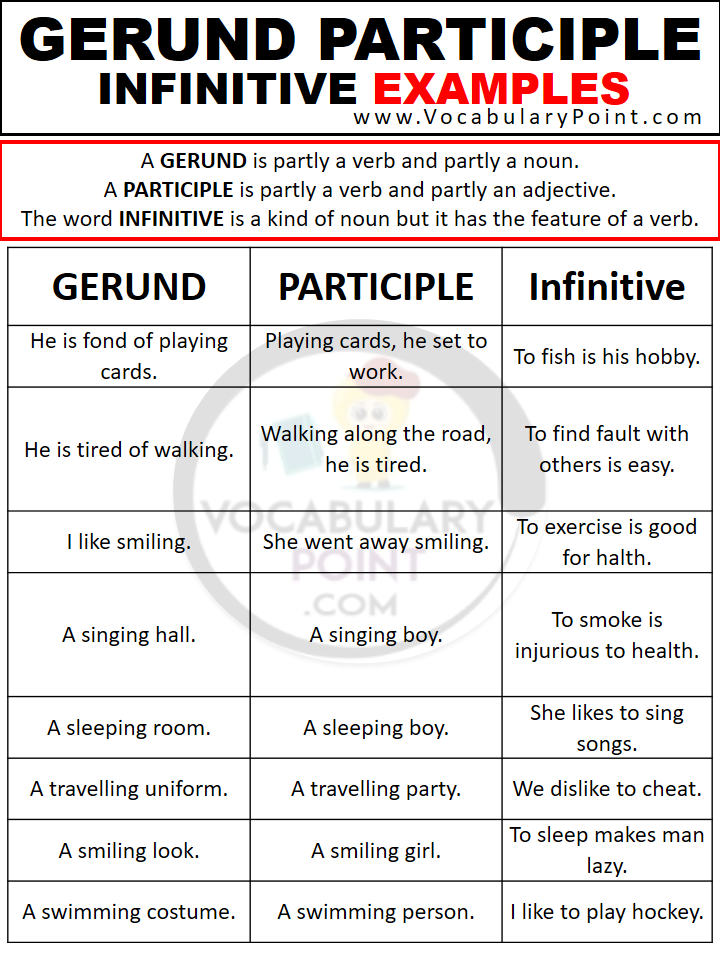
Here are some exercises to help you practice using gerunds and infinitives in sentences:
1. Fill in the blanks with the correct form of the verb (gerund or infinitive):
- I enjoy __________ (read) books in my free time.
- She promised __________ (help) me with my homework.
- They decided __________ (go) to the movies tonight.
2. Rewrite the following sentences using gerunds or infinitives:
- She wants to play tennis. -> She enjoys __________ tennis.
- We need to study for the exam. -> We are looking forward to __________ for the exam.
- He likes to sing in the shower. -> He is good at __________ in the shower.
3. Choose the correct form of the verb (gerund or infinitive) to complete the sentence:
- I avoid __________ (eat) fast food because it is unhealthy.
- He offered __________ (help) us with the project.
- She forgot __________ (buy) milk at the store.
Practicing gerunds and infinitives in these exercises can help you become more confident in using them correctly in your spoken and written English. Remember to pay attention to the context of the sentence and the verb that precedes the gerund or infinitive to ensure proper usage.
By regularly practicing gerund and infinitive exercises, you can improve your grammar skills and communicate more effectively in English.