In the English language, pronouns play a crucial role in replacing nouns to avoid repetition. They help make sentences more concise and easier to understand. Identifying pronouns correctly is important for effective communication.
When reading a sentence, it is essential to recognize pronouns and understand their antecedents. Pronouns refer back to nouns that have already been mentioned or are understood from the context. This connection is key to grasping the meaning of a sentence.
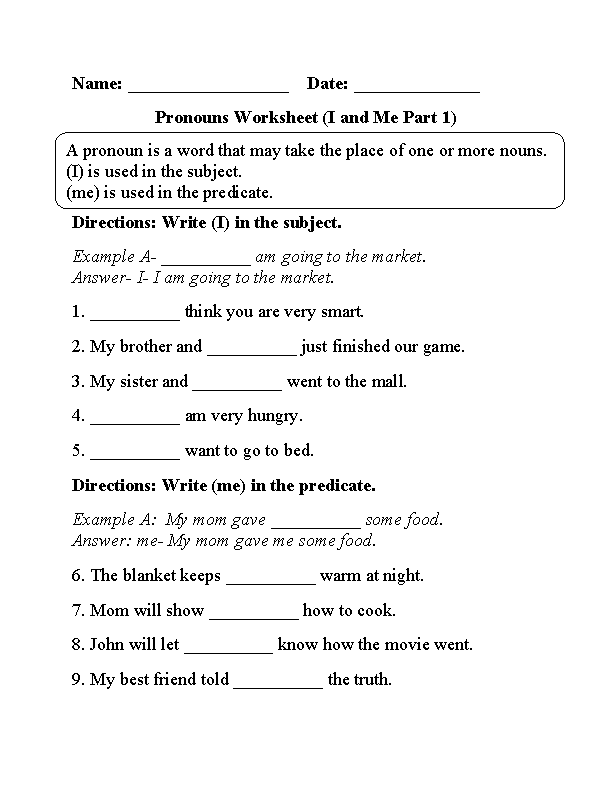
Identifying Pronouns
Pronouns can take the place of various parts of speech, including nouns, proper nouns, and even whole phrases. Common pronouns include personal pronouns (I, you, he, she, it, we, they), possessive pronouns (mine, yours, his, hers, ours, theirs), and demonstrative pronouns (this, that, these, those).
One way to identify pronouns is to look for words that replace nouns in a sentence. For example, in the sentence “She went to the store,” the pronoun “she” replaces the name of the person who went to the store. Pronouns can also indicate gender, number, and case.
It is important to pay attention to pronoun-antecedent agreement to ensure clarity in writing. The pronoun must match its antecedent in gender, number, and person. For instance, if the antecedent is singular, the pronoun should also be singular. Incorrect agreement can lead to confusion and ambiguity.
Additionally, some pronouns can be ambiguous and require context to determine their meaning. For example, the pronoun “it” can refer to a variety of things, so understanding the context of the sentence is crucial in interpreting its intended meaning.
In conclusion, identifying pronouns is essential for understanding and interpreting written and spoken language. By recognizing pronouns and their antecedents, readers and listeners can follow the flow of a sentence and extract the intended meaning. Paying attention to pronoun-antecedent agreement and understanding the context can help avoid confusion and ensure effective communication.