Idioms are expressions or phrases that have a figurative meaning different from the literal meaning of the words. They are a common feature of language and are often used in everyday conversations. Idioms can add color, humor, and depth to our language, but they can also be confusing for non-native speakers.
Learning about idioms and their meanings can help you better understand the nuances of a language and improve your communication skills. By knowing the meanings behind common idioms, you can avoid misunderstandings and better express yourself in various situations.
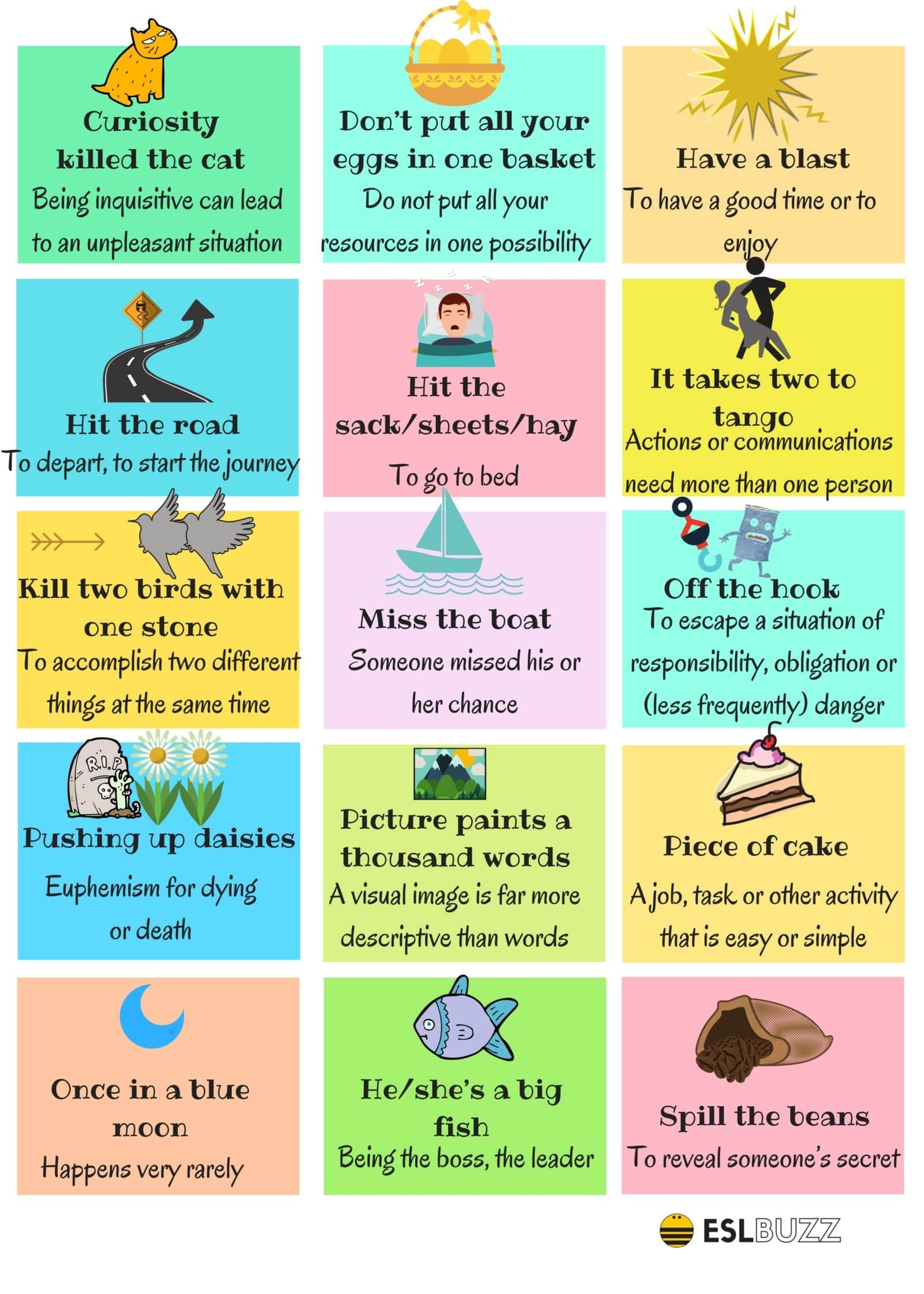
Idioms and Their Meaning
Idioms are a fascinating aspect of language that can be both fun and challenging to learn. Here are a few examples of idioms and their meanings:
1. “Break a leg” – This idiom is often used to wish someone good luck, especially before a performance or presentation. It originated in the world of theater, where saying “good luck” was considered bad luck.
2. “Bite the bullet” – This idiom means to endure a painful or difficult situation with courage and perseverance. It comes from the practice of giving soldiers a bullet to bite on to help them endure the pain of surgery without anesthesia.
3. “Cost an arm and a leg” – This idiom is used to describe something that is very expensive. It implies that the cost is so high that one would have to sacrifice a limb to afford it.
4. “Hit the nail on the head” – This idiom means to describe someone who has made an accurate assessment or statement. It comes from the act of hitting a nail directly on its head, resulting in a precise and successful action.
5. “Piece of cake” – This idiom is used to describe something that is very easy to do. It compares the task to eating a piece of cake, which is typically easy and enjoyable.
These are just a few examples of the many idioms that exist in the English language. Understanding the meanings behind these expressions can help you navigate conversations more effectively and add depth to your language skills.
In conclusion, idioms are a valuable part of language that can enhance communication and add richness to our conversations. By learning about idioms and their meanings, you can become a more proficient and expressive speaker. So, the next time you come across an unfamiliar idiom, take the time to explore its origins and meanings to expand your language skills.