Idioms are phrases or expressions that have a figurative meaning, different from the literal meaning of the words. They are commonly used in everyday language and can add color and depth to writing and speech. Understanding idioms is important for students as they encounter them frequently in conversations, literature, and exams.
Learning idioms can be a fun way to improve language skills and become more fluent in English. By mastering idioms, students can enhance their communication skills and better understand the nuances of the language.
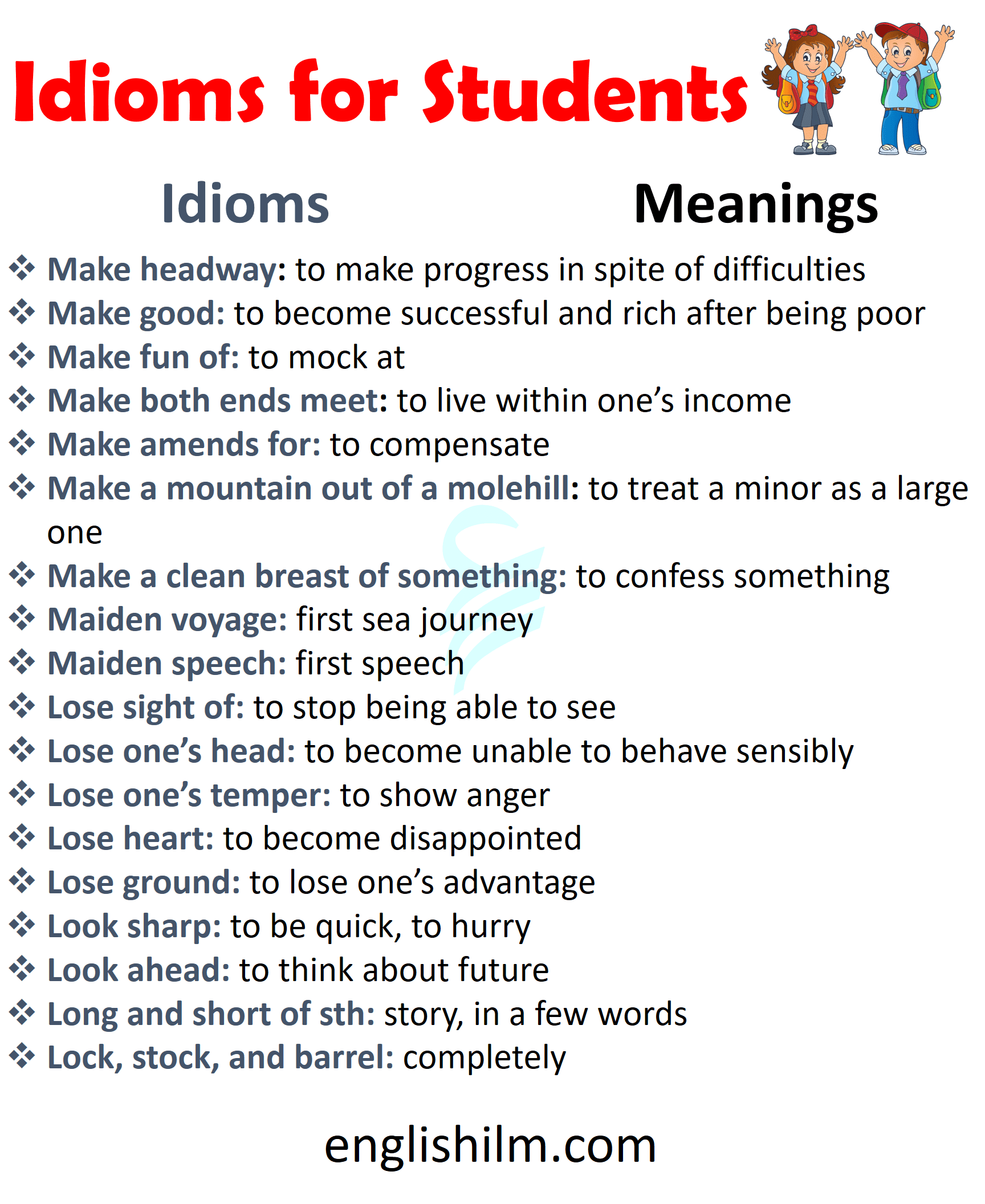
Examples of Idioms for Students
Here are some common idioms that students may come across:
- “Break a leg” – Good luck
- “Hit the books” – Study hard
- “Piece of cake” – Something very easy
- “Cost an arm and a leg” – Very expensive
- “Bite the bullet” – Endure a painful situation
Understanding these idioms and being able to use them in conversation can make students sound more natural and fluent in English. It also helps in improving their overall language proficiency.
Practicing idioms through exercises, games, and conversations with native speakers can help students grasp the meanings and usage of these expressions. By incorporating idiomatic expressions into their vocabulary, students can become more effective communicators.
Teachers can also include idioms in their lessons to make learning more engaging and interactive. Encouraging students to use idioms in their writing and speaking assignments can help them to remember and apply these expressions in the future.
Overall, idioms are an essential part of the English language and mastering them can greatly benefit students in their academic and professional endeavors. By learning and using idioms effectively, students can express themselves more creatively and confidently, making their language skills stand out.