Idioms are phrases or expressions that have a figurative, rather than literal, meaning. They are commonly used in everyday language to convey a message or idea in a more colorful and interesting way. Understanding idioms can help you better grasp the nuances of a language and communicate more effectively.
Learning idioms can be a fun and rewarding experience, as they often reflect the culture and history of a particular language. By familiarizing yourself with idiomatic expressions, you can enhance your language skills and better connect with native speakers.
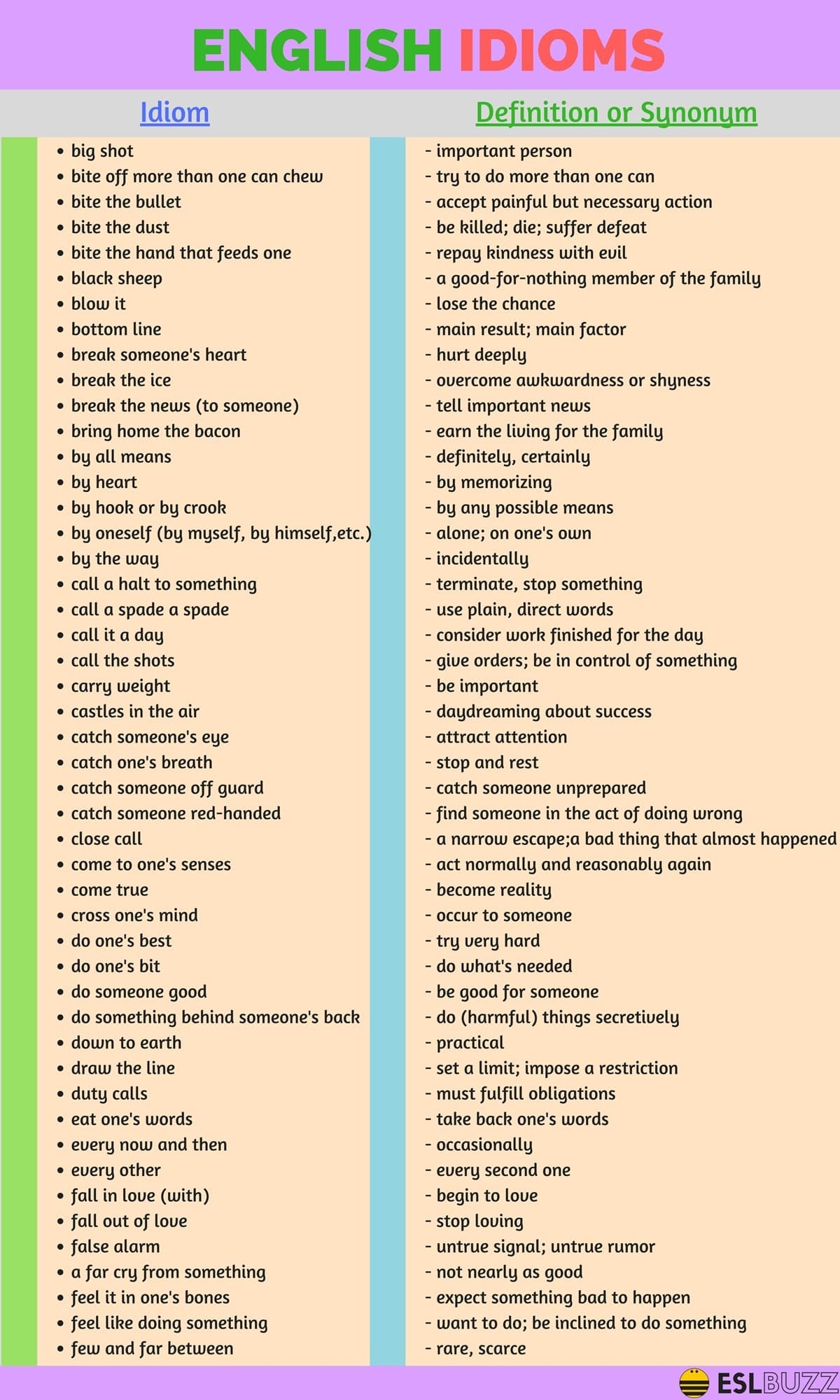
Common Idioms and Their Meanings
1. “Break a leg” – This idiom is used to wish someone good luck, especially before a performance or event.
2. “Bite the bullet” – To “bite the bullet” means to endure a painful or difficult situation with courage and resolve.
3. “Cost an arm and a leg” – This idiom is used to describe something that is very expensive or costs a lot of money.
4. “Hit the nail on the head” – To “hit the nail on the head” means to accurately or precisely address an issue or situation.
5. “Piece of cake” – This idiom is used to describe something that is very easy or simple to do.
Understanding these idiomatic expressions and their meanings can help you communicate more effectively and express yourself in a more colorful and engaging way. By incorporating idioms into your language skills, you can better connect with others and enhance your overall communication abilities.
Overall, idioms are a fascinating aspect of language that can add depth and richness to your conversations and writing. By exploring and learning idiomatic expressions, you can enhance your language skills and better connect with others on a cultural and linguistic level.
So next time you come across an unfamiliar idiom, take the time to learn its meaning and usage. You may be surprised at how much it can enrich your language skills and help you better understand the nuances of the language you are learning.