When it comes to grammar, one of the fundamental parts of speech is the pronoun. Pronouns are used in place of nouns to avoid repetition and make sentences flow more smoothly. They can refer to people, places, things, or ideas, and are essential for clear and concise communication.
Without pronouns, sentences would become cumbersome and repetitive. Imagine having to constantly repeat a person’s name every time you refer to them in a sentence. Pronouns make language more efficient and help to maintain the reader’s interest.
Definition of a Pronoun
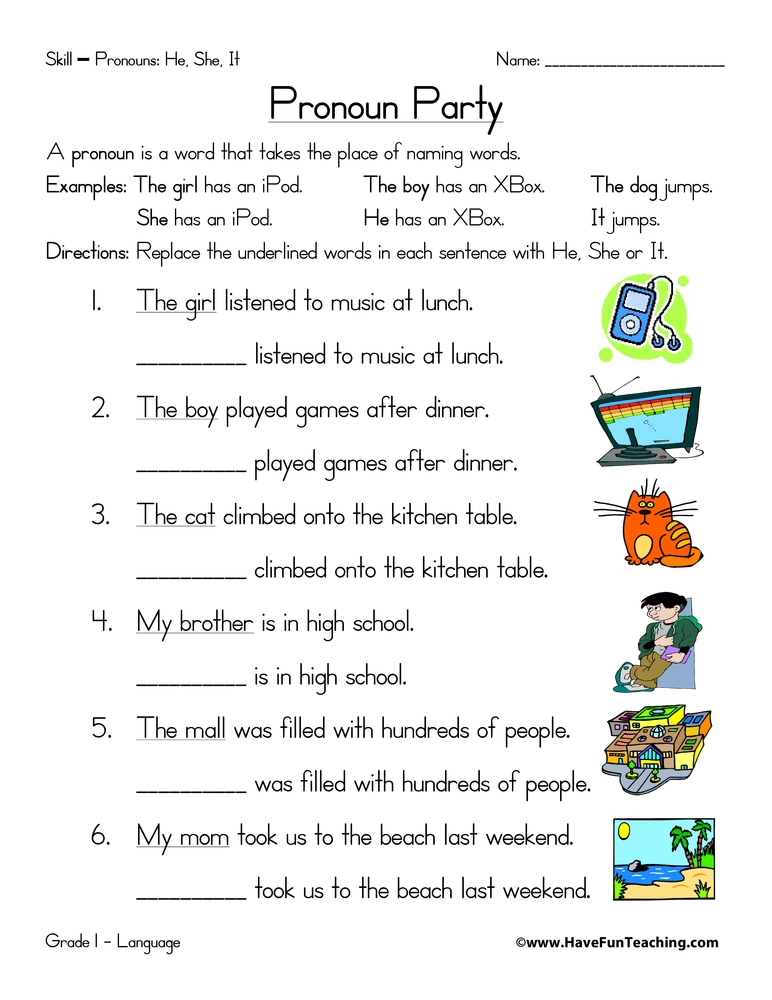
A pronoun is a word that takes the place of a noun in a sentence. It can function as a subject, object, possessive, or reflexive. Common pronouns include he, she, it, they, we, you, me, him, her, us, and them. Pronouns can also be classified as personal, demonstrative, interrogative, relative, or indefinite.
Personal pronouns refer to specific people or things and can vary in gender and number. Demonstrative pronouns indicate specific nouns and include words like this, that, these, and those. Interrogative pronouns are used to ask questions, such as who, what, which, and whose. Relative pronouns introduce clauses and connect them to the main sentence, like who, whom, which, and that. Indefinite pronouns refer to non-specific people or things, such as some, any, all, and none.
Pronouns play a crucial role in maintaining cohesion and coherence in writing. They help to connect ideas and clarify relationships between different elements in a sentence. Pronouns are also essential for storytelling, as they allow writers to refer back to characters and objects without repeating their names over and over again.
In conclusion, pronouns are an integral part of language that help to streamline communication and make sentences more concise. By replacing nouns with pronouns, writers can enhance the clarity and flow of their writing. Understanding the different types and functions of pronouns is key to becoming a proficient communicator and writer.