Subordinating conjunctions are words that connect dependent clauses to independent clauses in a sentence. They help to show the relationship between the two clauses and indicate which is more important. Understanding subordinating conjunctions is important for creating complex and coherent sentences.
Here are five common subordinating conjunctions:
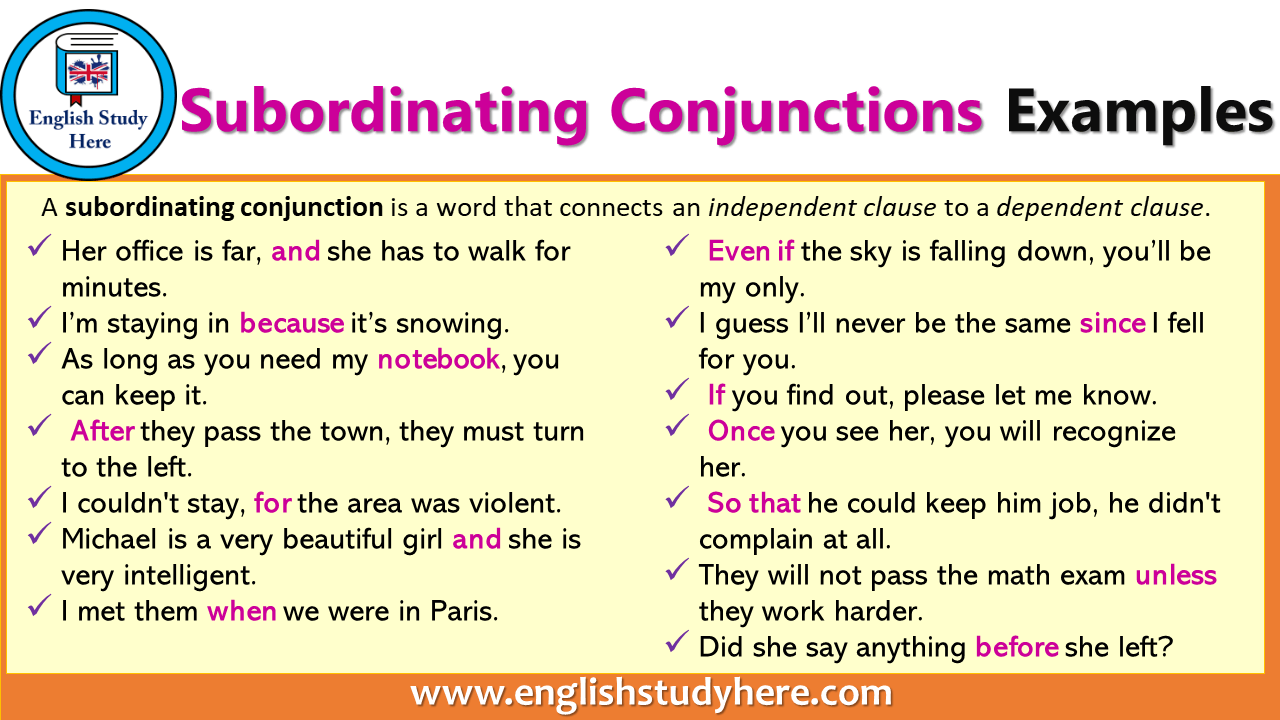
List of Subordinating Conjunctions:
- although
- because
- if
- since
- while
1. Although: This subordinating conjunction is used to introduce a contrast or unexpected information. For example, “Although it was raining, we decided to go for a walk.”
2. Because: This conjunction is used to show cause and effect. For example, “We stayed inside because it was raining.”
3. If: This word is used to introduce a condition. For example, “If it rains, we will need an umbrella.”
4. Since: This conjunction is used to show a reason or time relationship. For example, “Since it was a holiday, we went to the beach.”
5. While: This conjunction is used to show a contrast or simultaneous action. For example, “While I was studying, my sister was watching TV.”
Using these subordinating conjunctions can help you create more complex and varied sentences. By understanding their meanings and functions, you can improve the clarity and coherence of your writing.
In conclusion, subordinating conjunctions play a crucial role in connecting different parts of a sentence and showing relationships between ideas. By incorporating these conjunctions into your writing, you can create more sophisticated and engaging sentences. Practice using these subordinating conjunctions in your writing to enhance your language skills and communicate more effectively.