Pronouns are words that are used in place of nouns in a sentence. They help avoid repetition and make sentences more concise. There are different types of pronouns in the English language, each serving a specific purpose in a sentence.
Understanding pronouns is essential for effective communication and writing. In this article, we will explore a list of pronouns commonly used in English language.
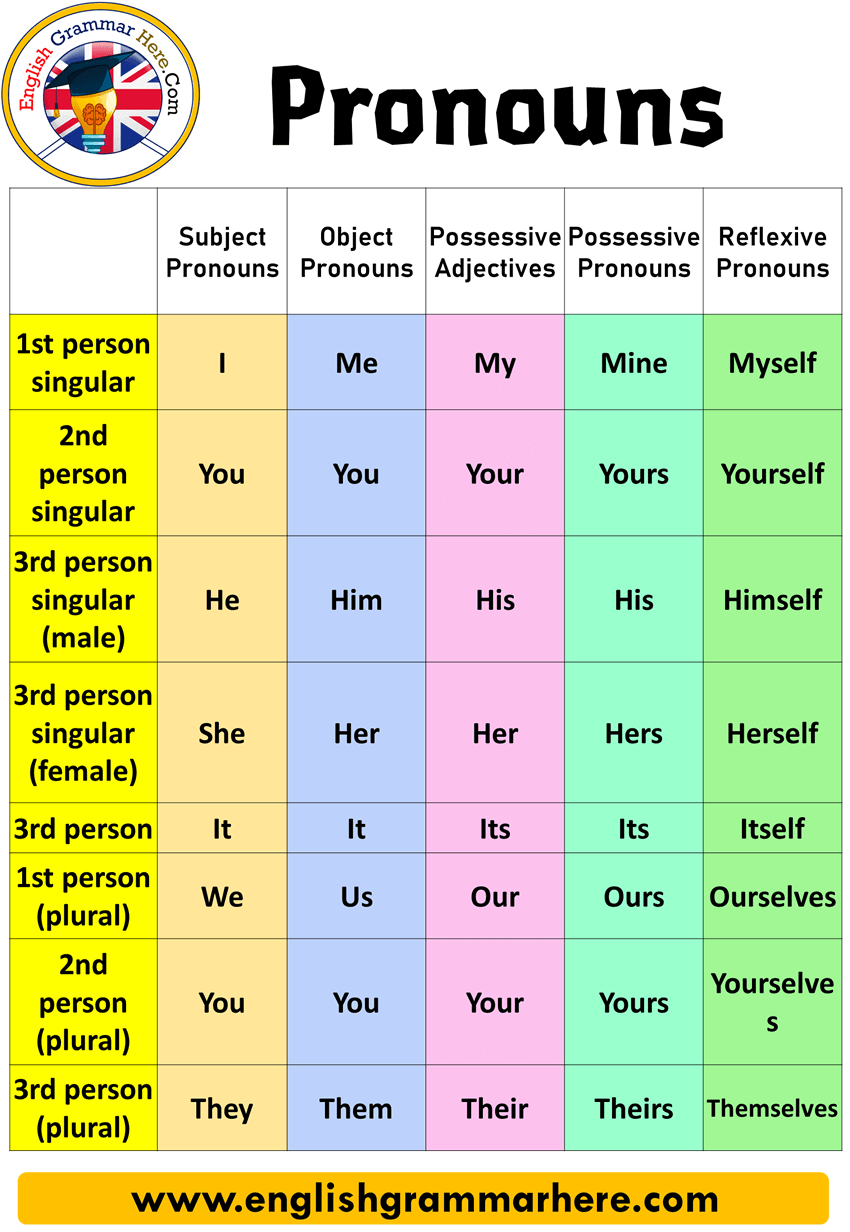
Common Pronouns:
1. Personal Pronouns: Personal pronouns refer to specific people or things. They can be singular or plural, and they vary based on the person (first, second, or third). Examples include: I, you, he, she, it, we, they.
2. Possessive Pronouns: Possessive pronouns show ownership or possession. They replace nouns and indicate that something belongs to someone. Examples include: mine, yours, his, hers, ours, theirs.
3. Reflexive Pronouns: Reflexive pronouns are used when the subject and object of a sentence refer to the same person or thing. They end in -self or -selves. Examples include: myself, yourself, himself, herself, itself, ourselves, themselves.
4. Demonstrative Pronouns: Demonstrative pronouns are used to point to specific things or people. They can indicate proximity or distance. Examples include: this, that, these, those.
5. Interrogative Pronouns: Interrogative pronouns are used to ask questions. They introduce questions and request information. Examples include: who, whom, whose, which, what.
Understanding the different types of pronouns and how to use them correctly is essential for effective communication in English. By incorporating a variety of pronouns in your writing, you can avoid repetition and make your sentences more engaging and dynamic.
In conclusion, pronouns play a crucial role in language and communication. They help to streamline sentences, provide clarity, and enhance the flow of writing. By familiarizing yourself with the various types of pronouns and their functions, you can improve your writing skills and become a more effective communicator.