When it comes to language, pronouns play a crucial role in communication. Pronouns are words that take the place of nouns in a sentence, making it easier to refer to a person, place, thing, or idea without constantly repeating the noun. There are several types of pronouns in the English language, each serving a specific purpose.
Understanding the different types of pronouns can help improve your writing and speaking skills, as well as enhance your overall communication abilities. Below is a list of pronouns commonly used in English:
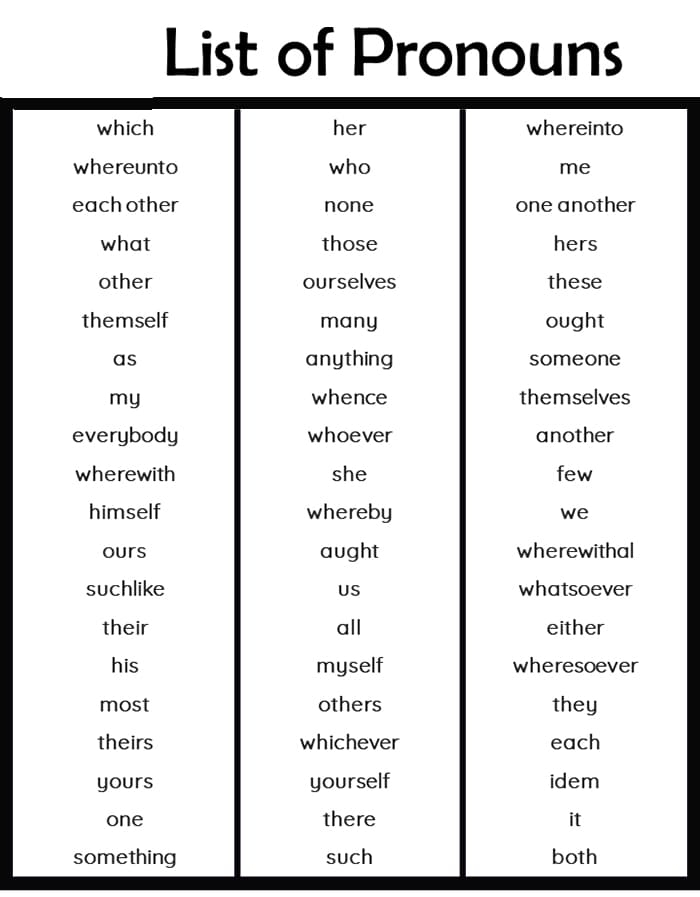
Types of Pronouns:
- Personal Pronouns (e.g. I, you, he, she, it, we, they)
- Reflexive Pronouns (e.g. myself, yourself, himself, herself, itself, ourselves, themselves)
- Possessive Pronouns (e.g. mine, yours, his, hers, its, ours, theirs)
- Relative Pronouns (e.g. who, whom, whose, which, that)
- Demonstrative Pronouns (e.g. this, that, these, those)
Personal pronouns are used to refer to specific individuals or groups, while reflexive pronouns reflect the action back onto the subject. Possessive pronouns indicate ownership or possession, and relative pronouns introduce subordinate clauses. Demonstrative pronouns point to specific people or things in a sentence.
It is important to use pronouns correctly in order to avoid confusion and ensure clarity in your writing. Misusing pronouns can lead to misunderstandings and hinder effective communication. By familiarizing yourself with the different types of pronouns and their functions, you can enhance your language skills and express yourself more effectively.
In conclusion, pronouns are essential components of language that help us communicate efficiently and effectively. By utilizing the appropriate pronouns in your writing and speech, you can convey your message clearly and accurately. Remember to pay attention to pronoun usage and ensure that they match the nouns they replace. Practice using pronouns in various contexts to improve your language skills and become a more proficient communicator.