Medical terminology can be overwhelming for those who are not familiar with it. However, understanding common medical vocabulary is important for effective communication with healthcare professionals and for gaining a better understanding of your own health. By familiarizing yourself with these terms, you can navigate medical discussions and appointments more confidently.
Whether you are a healthcare professional, a student studying medicine, or someone looking to improve their medical literacy, having a basic understanding of medical terminology is essential. Here is a list of common medical terms that you may encounter:
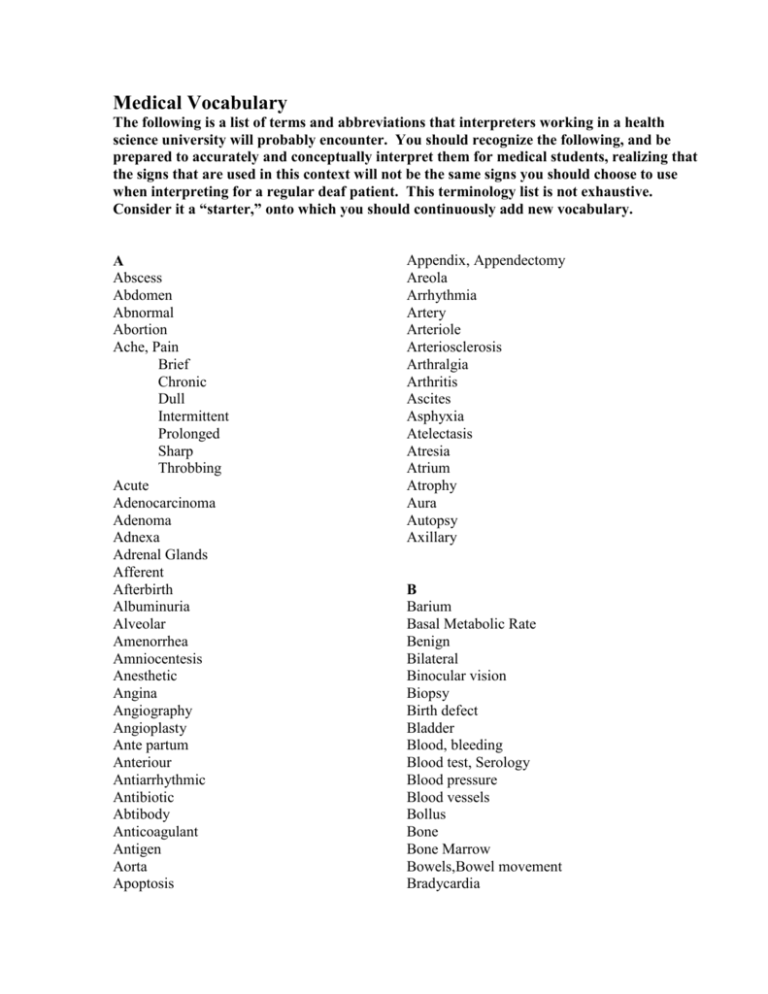
Medical Vocabulary List
- Anemia
- Hypertension
- Diabetes
- Cholesterol
- Antibiotics
1. Anemia: A condition characterized by a lack of healthy red blood cells or hemoglobin in the blood, resulting in fatigue and weakness.
2. Hypertension: High blood pressure, a common condition that can lead to serious health complications if left untreated.
3. Diabetes: A chronic disease that affects how your body uses blood sugar (glucose), leading to high levels of glucose in the blood.
4. Cholesterol: A waxy, fat-like substance found in your blood. High levels of cholesterol can increase the risk of heart disease.
5. Antibiotics: Medications used to treat bacterial infections by killing or inhibiting the growth of bacteria.
Understanding these terms can help you communicate effectively with your healthcare provider and better comprehend medical information. By familiarizing yourself with medical vocabulary, you can take an active role in managing your health and making informed decisions about your care.
Overall, building a foundation of medical terminology can empower you to advocate for your health and engage in meaningful discussions with healthcare professionals. By expanding your knowledge of medical vocabulary, you can enhance your healthcare experience and improve your overall well-being.
Take the time to learn and understand common medical terms to navigate the healthcare system with confidence and empower yourself to make informed choices about your health.