Words are the building blocks of language, allowing us to communicate, express ourselves, and convey our thoughts and emotions. Among the various types of words, nouns, verbs, adjectives, and adverbs play crucial roles in shaping the structure and meaning of sentences.
While nouns represent people, places, things, or ideas, verbs denote actions or states of being. Adjectives describe or modify nouns, adding details and enhancing the imagery of a sentence. Adverbs, on the other hand, modify verbs, adjectives, or other adverbs, providing additional information about how, when, where, or to what extent an action is performed.
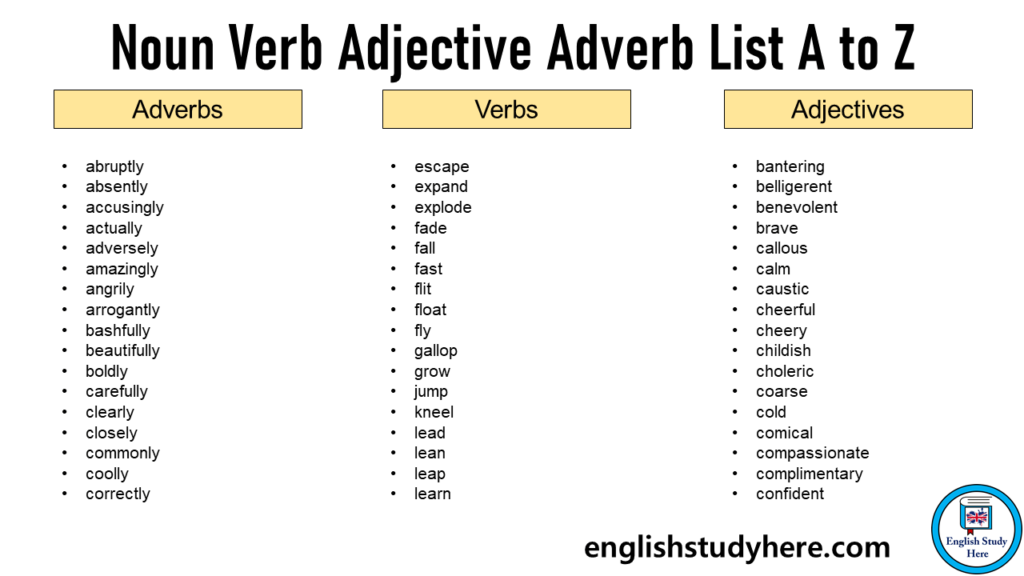
Adjectives
Adjectives are essential in painting vivid pictures with words. By adding descriptive details to nouns, they help to create a more engaging and colorful language. For example, instead of saying “the car,” we can say “the sleek black car,” providing a clearer image of the object. Adjectives can also evoke emotions and set the tone of a sentence, influencing the reader’s perception and creating a more immersive reading experience.
Furthermore, adjectives can be used to compare or differentiate between things, indicating degrees of qualities. For instance, we can say “the tallest building” to highlight the superior height of a structure compared to others. Adjectives also allow us to express subjective opinions or judgments, shaping the overall tone and attitude of a piece of writing.
In addition to their descriptive functions, adjectives can also serve as classifiers, categorizing nouns into specific groups or classes. By using adjectives such as “French cuisine” or “ancient artifacts,” we can provide additional context and information about the noun, helping to clarify its meaning and significance.
Overall, adjectives play a crucial role in enriching language, adding depth, clarity, and emotion to our expressions. Whether used to describe physical attributes, evoke sensory experiences, or convey personal opinions, adjectives are essential tools in crafting compelling and impactful communication.
In conclusion, the careful selection and placement of nouns, verbs, adjectives, and adverbs are key to effective communication and powerful writing. By understanding and harnessing the unique functions of each word type, we can create more engaging, expressive, and memorable language. So, next time you write or speak, pay attention to the nuances of nouns, verbs, adjectives, and adverbs, and watch how they transform your words into powerful tools of expression.