Understanding the parts of speech is essential for mastering the English language. Each part of speech plays a unique role in constructing sentences and conveying meaning. One important part of speech is the word “what,” which can function in various ways depending on its usage in a sentence.
From asking questions to indicating uncertainty, “what” is a versatile word that can serve as different parts of speech in English grammar. Let’s explore the different roles that “what” can play in a sentence.
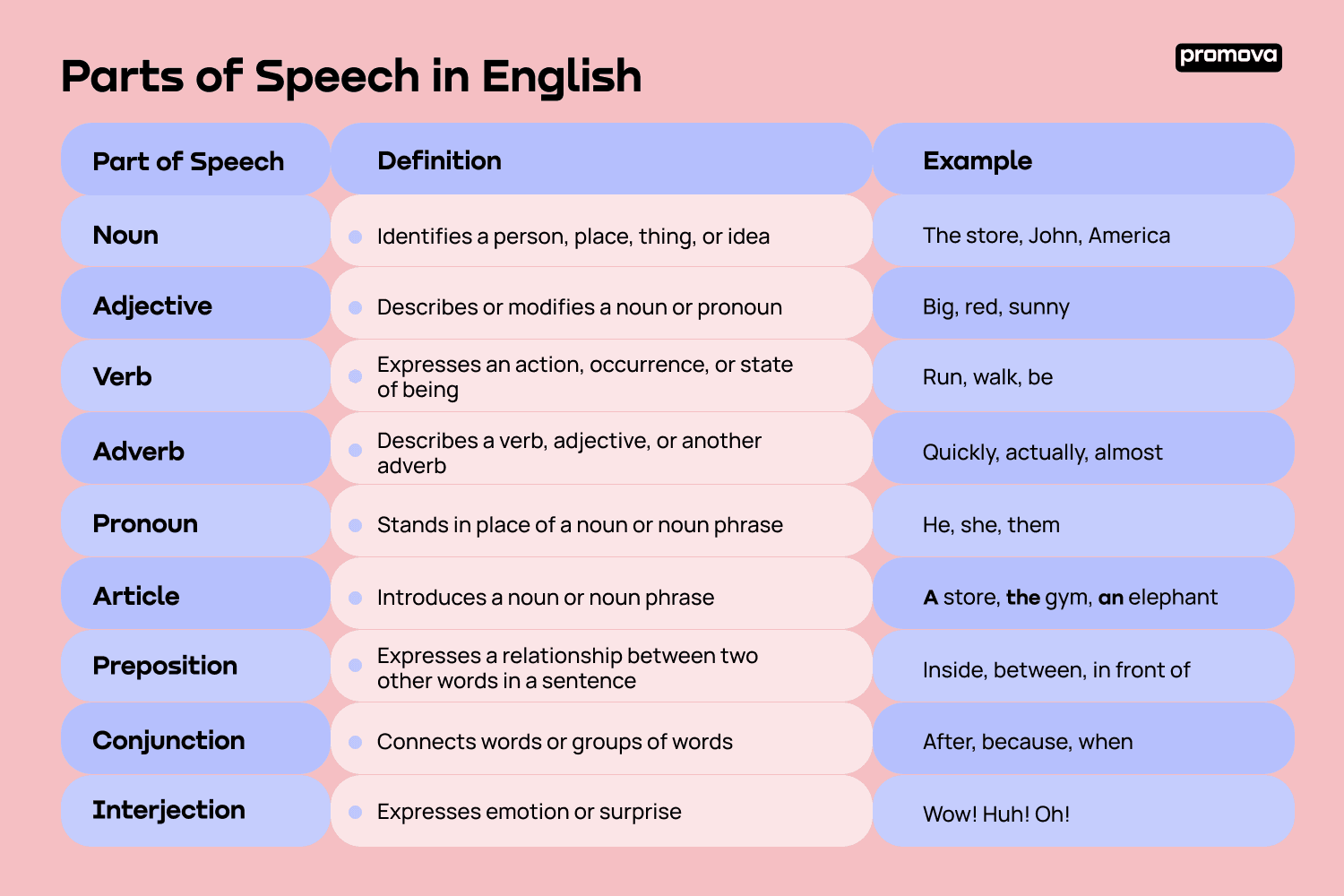
Parts of Speech for “What”
1. Interrogative Pronoun: When used to ask questions, “what” functions as an interrogative pronoun. For example, “What is your favorite color?” In this sentence, “what” is used to inquire about the specific color that the person likes.
2. Relative Pronoun: In some cases, “what” can also act as a relative pronoun, introducing a clause that provides additional information about a noun. For instance, “I don’t know what he wants.” Here, “what” introduces the subordinate clause “he wants,” explaining the unknown information.
3. Exclamatory Pronoun: “What” can be used as an exclamatory pronoun to express surprise, excitement, or disbelief. For example, “What a beautiful sunset!” In this sentence, “what” is used to convey admiration for the stunning view of the sunset.
4. Determiner: When used before a noun, “what” can function as a determiner, indicating an unknown or unspecified thing. For instance, “What book are you reading?” Here, “what” precedes the noun “book” to specify the object of the question.
5. Adverb: In certain contexts, “what” can also serve as an adverb, modifying a verb, adjective, or another adverb. For example, “She was surprised by what she saw.” In this sentence, “what” modifies the verb “saw” by specifying the action that caused surprise.
In conclusion, the word “what” can function as an interrogative pronoun, relative pronoun, exclamatory pronoun, determiner, or adverb in English grammar. By understanding the various roles that “what” can play in a sentence, you can improve your language skills and communicate more effectively.