Passive voice is a grammatical construction in which the subject of a sentence is not the doer of the action, but rather the receiver. This can sometimes lead to confusion, as the focus shifts from the doer to the action itself. In English, passive voice is formed using a form of the verb “to be” along with the past participle of the main verb. Understanding passive verb examples can help clarify this concept.
Passive voice is often used in formal writing, scientific papers, and when the doer of the action is unknown or unimportant. While active voice is generally preferred for its clarity and directness, passive voice can be useful in certain situations. Let’s explore some examples of passive verb constructions:
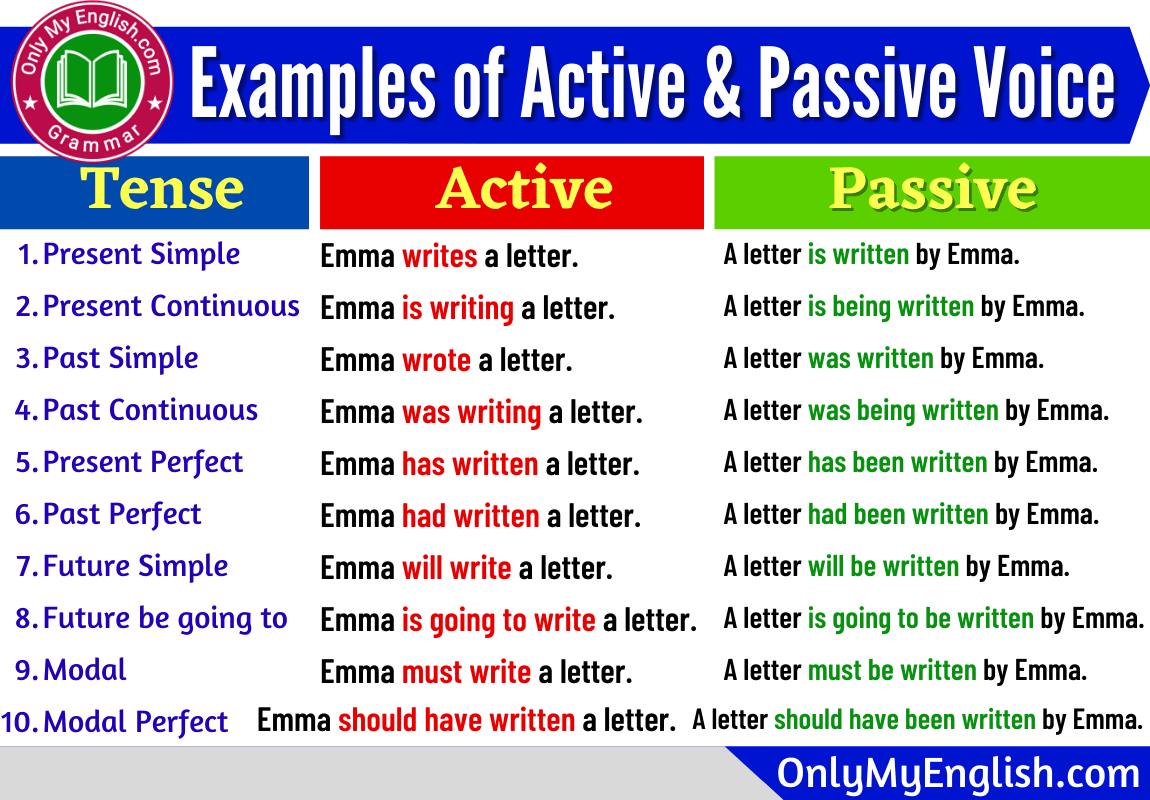
Passive Verb Examples:
1. The cake was baked by Mary. (Active: Mary baked the cake.)
2. The report will be reviewed by the committee. (Active: The committee will review the report.)
3. The car was stolen last night. (Active: Someone stole the car last night.)
4. The house was built in the 19th century. (Active: Someone built the house in the 19th century.)
5. The book has been read by millions of people. (Active: Millions of people have read the book.)
By using passive voice in these examples, the focus is shifted to the action rather than the doer. This can be helpful in emphasizing the action itself or in situations where the doer is unknown or irrelevant. However, it’s important to use passive voice judiciously and consider the context in which it is being used.
While passive voice can be a useful tool in writing, overusing it can lead to awkward and unclear sentences. It’s important to strike a balance between active and passive voice to ensure clarity and readability in your writing. By understanding passive verb examples and when to use them, you can improve the effectiveness of your writing and communication.
In conclusion, passive verb examples demonstrate the construction of sentences where the focus is on the action rather than the doer. By incorporating passive voice judiciously and understanding its usage, you can enhance the clarity and impact of your writing. Remember to consider the context and purpose of your writing when deciding whether to use passive voice in your sentences.