Passive voice is a grammatical construction in which the subject of a sentence is the recipient of the action rather than the doer. It is often used when the doer of the action is unknown, unimportant, or when the focus is on the action itself. While passive voice can sometimes make a sentence less direct or concise, it is still a useful tool in writing and can add variety to your sentences.
Many people struggle with identifying passive voice in their writing, but with practice, it becomes easier to recognize. By understanding passive verbs and how they function in a sentence, you can improve the clarity and effectiveness of your writing.
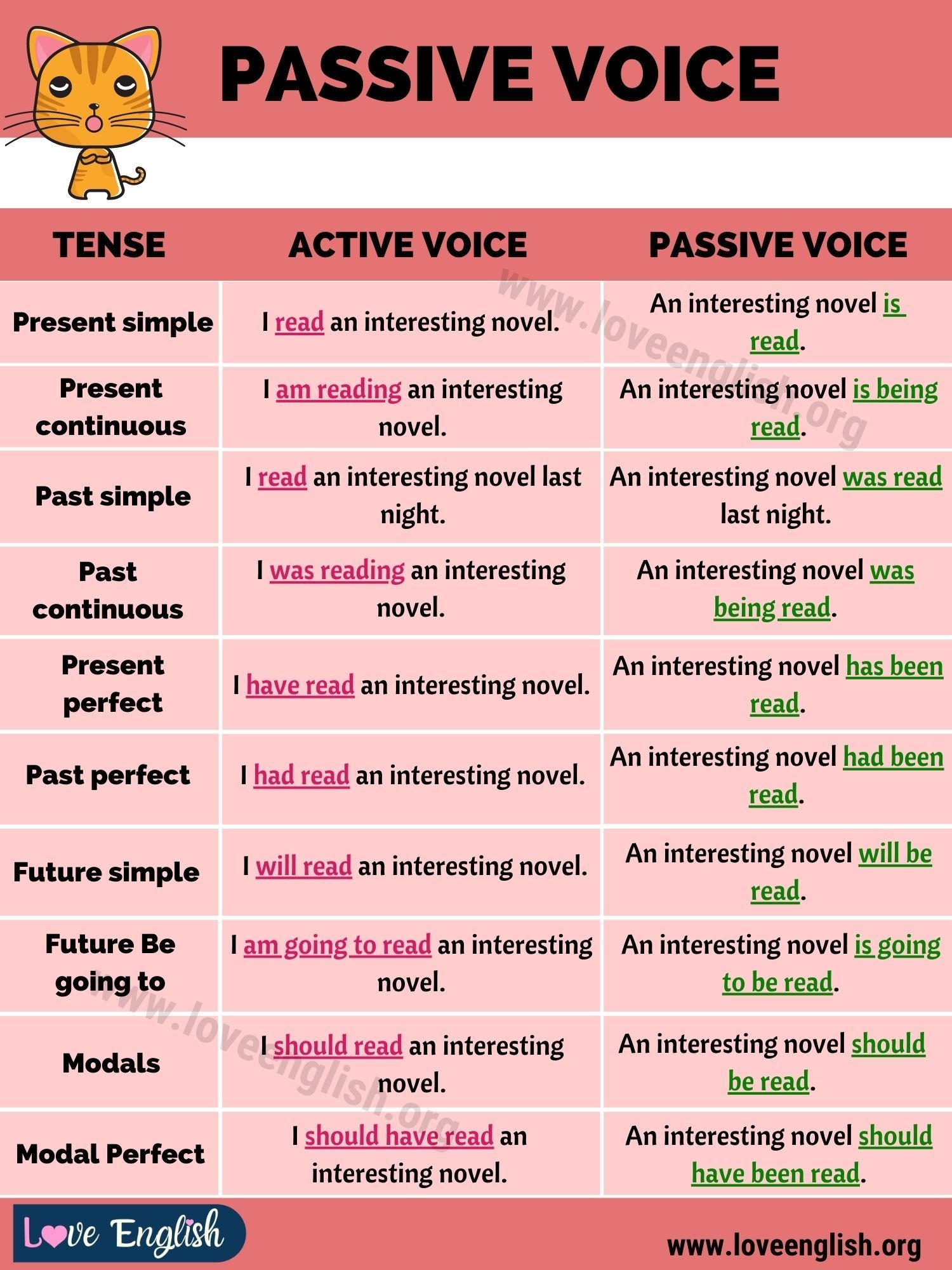
Examples of Passive Verbs
1. The cake was baked by my grandmother. (The focus is on the cake being baked, not on who baked it)
2. The report will be submitted by the end of the day. (The focus is on the report being submitted)
3. The movie was watched by millions of people. (The focus is on the movie being watched)
4. The house was built in the 1800s. (The focus is on the house being built)
5. The book has been read by students all over the world. (The focus is on the book being read)
Using passive verbs can be a great way to vary your sentence structure and add interest to your writing. However, it is important to use them judiciously and make sure they are adding value to your writing rather than detracting from it.
When using passive voice, be sure to consider who or what is performing the action and whether it is necessary to include that information in your sentence. By being mindful of your use of passive verbs, you can improve the clarity and impact of your writing.
In conclusion, passive verbs are a useful tool in writing that can help vary sentence structure and add interest to your writing. By understanding how passive voice functions and practicing its use, you can become a more effective and versatile writer. Remember to use passive verbs judiciously and consider the impact they have on your writing.