When learning English, one of the most common struggles for students is understanding the difference between past simple and present perfect tenses. These two tenses may seem similar at first, but they actually serve different purposes and are used in distinct contexts.
Understanding the nuances of past simple and present perfect can greatly improve your English language skills and help you communicate more effectively in both spoken and written English.
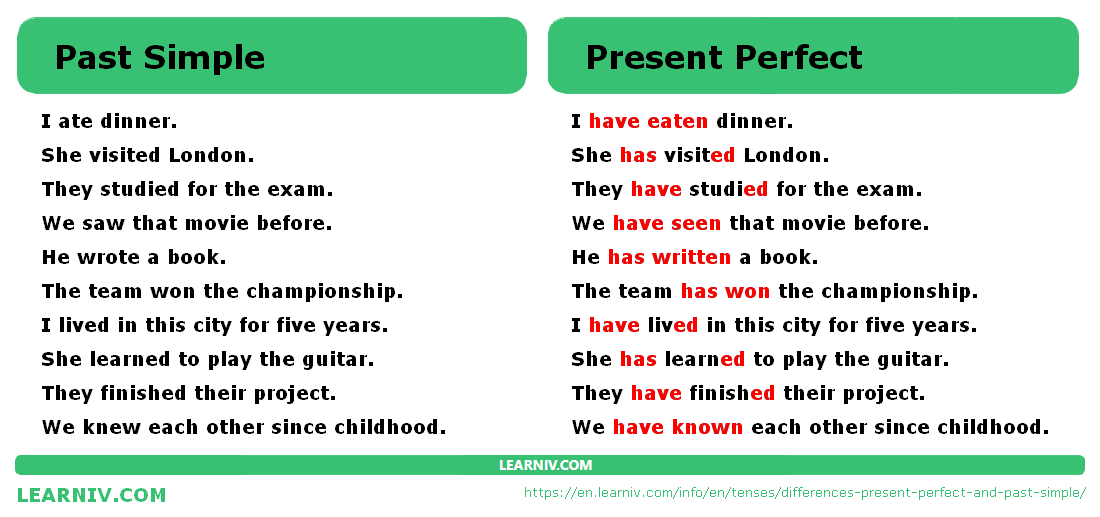
Past Simple vs Present Perfect
The past simple tense is used to describe actions that were completed at a specific point in the past. It is often accompanied by time expressions such as yesterday, last week, or in 1999. For example, “I visited my friend yesterday” or “She finished her homework last night.”
On the other hand, the present perfect tense is used to describe actions that have a connection to the present. This tense is often used with time expressions such as already, yet, or ever. For example, “I have already eaten dinner” or “She hasn’t finished her work yet.”
One key difference between past simple and present perfect is that the past simple focuses on a specific time in the past, while the present perfect focuses on the present result of a past action. The present perfect also implies that the action is still relevant or has an impact on the present moment.
Another difference is that the past simple is often used in stories or narratives to describe a sequence of events, while the present perfect is more commonly used in conversations or when talking about past experiences that have a connection to the present.
By understanding the differences between past simple and present perfect, you can improve your English language skills and become a more confident speaker and writer. Practice using both tenses in various contexts to deepen your understanding and fluency in English.
In conclusion, mastering the nuances of past simple and present perfect tenses is essential for becoming proficient in English. By recognizing when to use each tense and understanding their unique purposes, you can enhance your communication skills and express yourself more effectively in the English language.