Understanding the past tense of a verb is essential in English grammar. It is used to indicate an action that has already happened in the past. By learning how to form the past tense of a verb, you can effectively communicate about events and actions that took place before the present moment.
There are different rules and patterns to follow when forming the past tense of a verb in English. It is important to know these rules in order to use the correct verb form in sentences and conversations.
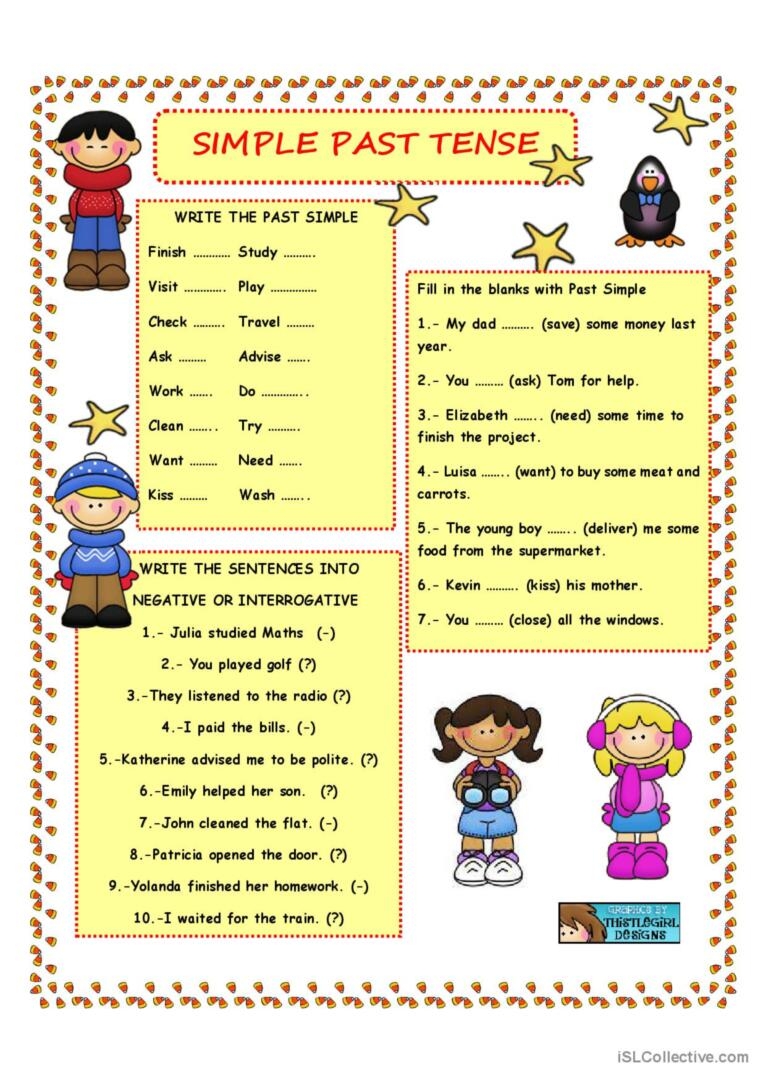
Regular Verbs
Regular verbs follow a simple pattern when forming the past tense. To form the past tense of a regular verb, you simply add “-ed” to the base form of the verb. For example, the past tense of the verb “walk” is “walked” and the past tense of the verb “play” is “played”.
Some common regular verbs include talk, jump, smile, and laugh. By adding “-ed” to these base forms, you can easily create the past tense form of these verbs in sentences.
It is important to note that there are also irregular verbs in English that do not follow the regular pattern when forming the past tense. These verbs have unique past tense forms that must be memorized. Some examples of irregular verbs include go (went), eat (ate), and see (saw).
By understanding the past tense of a verb and practicing forming past tense sentences, you can improve your English language skills and effectively communicate about events that have already happened. Whether you are writing a story, giving a presentation, or having a conversation, using the correct past tense forms will help you convey your message clearly and accurately.
In conclusion, mastering the past tense of a verb is crucial for effective communication in English. By following the rules and patterns for regular and irregular verbs, you can confidently use the correct past tense forms in your writing and speech. Practice forming past tense sentences and pay attention to verb conjugation to enhance your language skills.