Learning a new language can be challenging, especially when it comes to conjugating verbs. Portuguese, like many other Romance languages, has a complex system of verb conjugations that can be intimidating for beginners. However, with practice and dedication, mastering Portuguese verb conjugations is definitely achievable.
Portuguese verbs are divided into three main conjugation groups: -ar, -er, and -ir. Each group has its own set of rules for conjugating verbs in different tenses and moods. Understanding these rules is essential for effectively communicating in Portuguese.
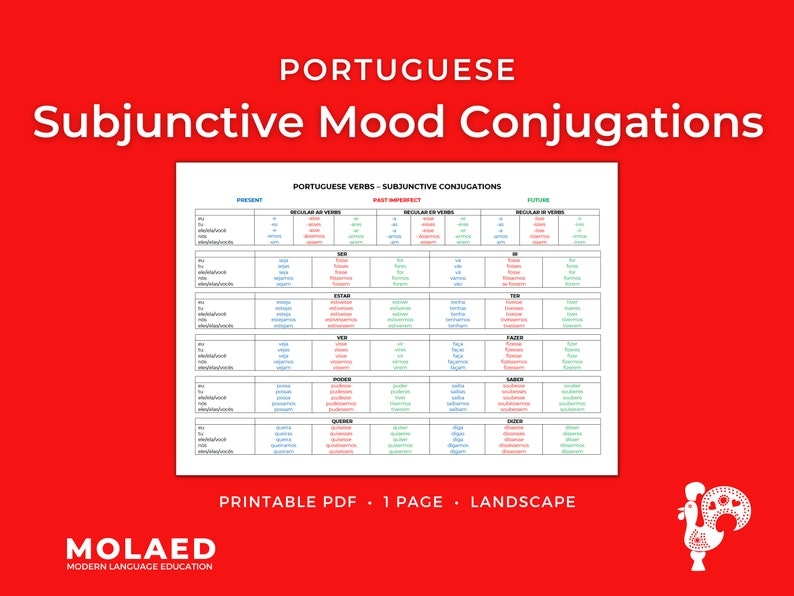
Portuguese Verb Conjugations
In Portuguese, verb conjugations change depending on the subject pronoun and the tense of the verb. For example, the verb “falar” (to speak) conjugated in the present tense would be:
- Eu falo
- Tu falas
- Ele/ela fala
- Nós falamos
- Vós falais
- Eles/elas falam
As you can see, each subject pronoun has a specific conjugation for the verb “falar” in the present tense. This pattern applies to all regular verbs in Portuguese.
Irregular verbs, on the other hand, have unique conjugations that do not follow the regular patterns of -ar, -er, and -ir verbs. Some common irregular verbs in Portuguese include “ser” (to be), “ir” (to go), and “ter” (to have). It is important to memorize the conjugations of these verbs to communicate effectively in Portuguese.
Verb conjugations in Portuguese also change depending on the mood of the verb, such as indicative, subjunctive, and imperative. Each mood has its own set of conjugation rules that must be followed when using verbs in different contexts.
Overall, mastering Portuguese verb conjugations requires practice, patience, and dedication. By studying the rules of verb conjugation and practicing regularly, you can improve your language skills and communicate more effectively in Portuguese.
In conclusion, Portuguese verb conjugations may seem daunting at first, but with dedication and practice, you can become proficient in conjugating verbs in different tenses and moods. Keep studying, practicing, and immerse yourself in the language to achieve fluency in Portuguese.