Understanding the difference between present perfect and past simple can be challenging for English learners. Both tenses are used to talk about past actions, but they are used in different contexts. By practicing exercises that focus on these tenses, learners can improve their understanding and usage of them.
It is important for English learners to know when to use present perfect and past simple to convey the correct meaning in a sentence. Present perfect is used to talk about actions that have a connection to the present or have been completed recently, while past simple is used to talk about actions that happened at a specific time in the past.
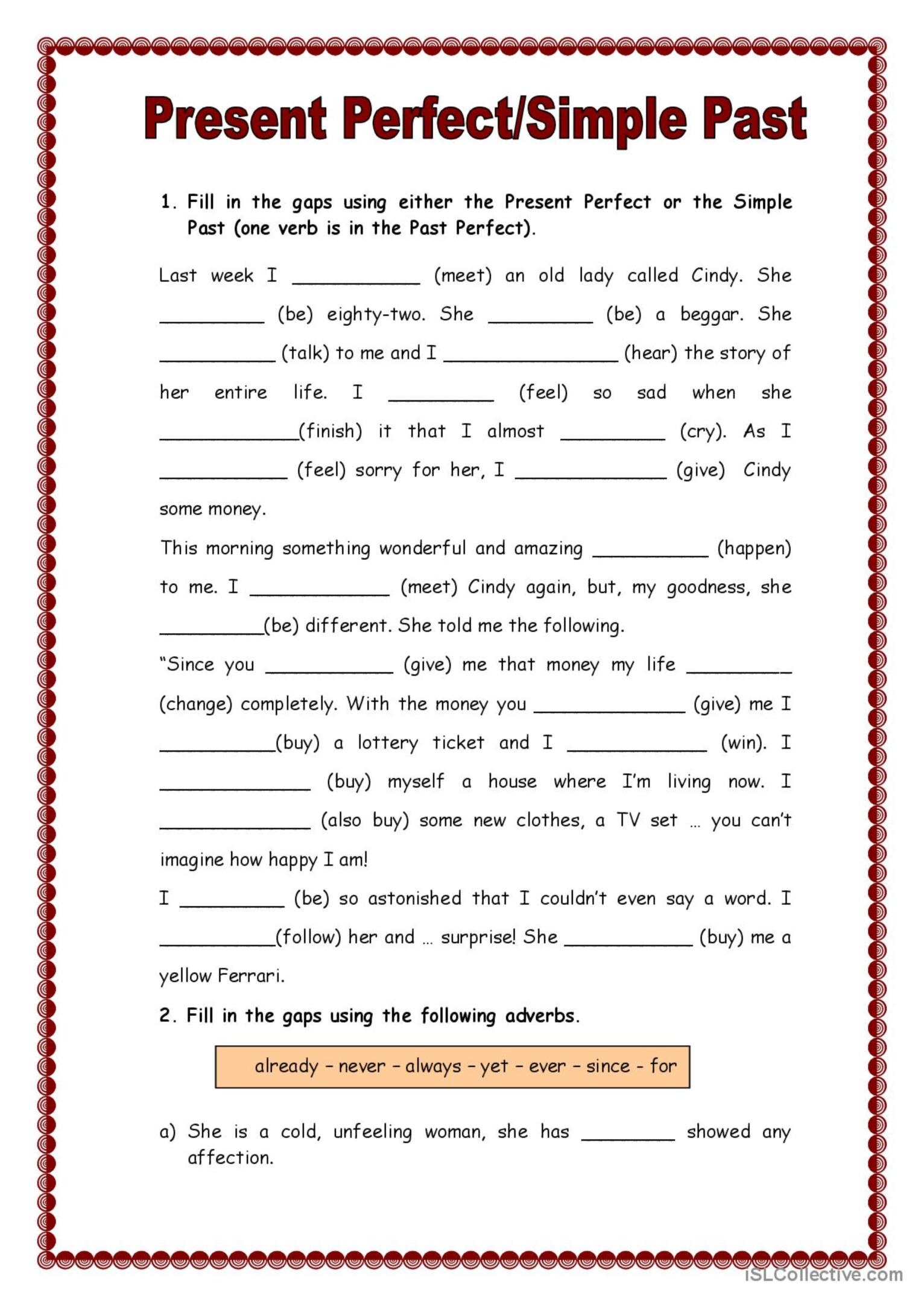
Exercises:
1. Fill in the blanks with the correct form of the verb in either present perfect or past simple:
a) I __________ (finish) my homework before dinner yesterday.
b) She __________ (visit) Paris several times.
c) They __________ (not see) that movie yet.
d) We __________ (go) to the beach last weekend.
e) He __________ (live) in this city for five years.
2. Rewrite the sentences using either present perfect or past simple:
a) I have read that book. (Past simple: I read that book.)
b) She has visited London twice. (Past simple: She visited London twice.)
c) They have not finished their project yet. (Past simple: They did not finish their project yet.)
d) We have been to Italy before. (Past simple: We went to Italy before.)
e) He has lived in this house since 2010. (Past simple: He lived in this house since 2010.)
Practicing exercises like these can help English learners become more comfortable with using present perfect and past simple correctly in their writing and speaking. By understanding the nuances of these tenses, learners can communicate more effectively in English.
In conclusion, mastering the usage of present perfect and past simple is essential for English learners to improve their language skills. By regularly practicing exercises that focus on these tenses, learners can strengthen their understanding and usage of them. With dedication and practice, learners can become more confident in using present perfect and past simple in their everyday communication.