Understanding the difference between present perfect and simple past tenses is essential for mastering English grammar. These two tenses are commonly used in both spoken and written English, and knowing when to use each one can help you communicate more effectively.
Present perfect is used to describe an action that happened at an unspecified time in the past, or that has relevance to the present moment. On the other hand, simple past is used to describe an action that occurred at a specific time in the past and is now completed.
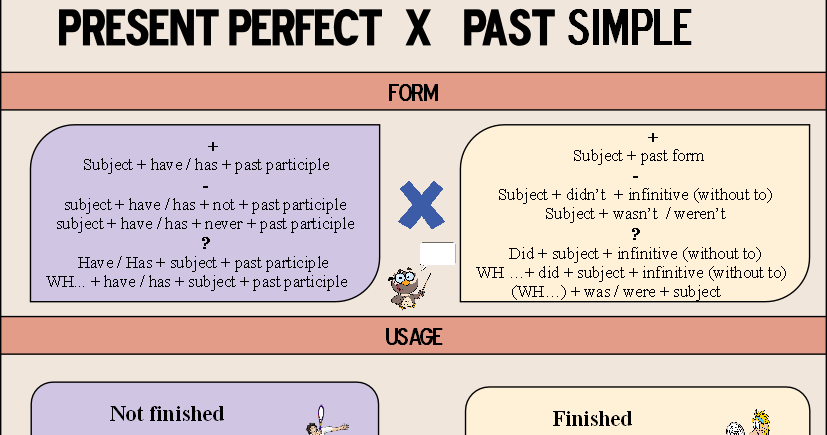
Present Perfect
The present perfect tense is formed by using the auxiliary verb “have” or “has” followed by the past participle of the main verb. For example, “I have finished my homework.” This tense is often used to talk about experiences, actions that have just been completed, or actions that have a connection to the present moment.
One important thing to remember about the present perfect tense is that it can be used with time expressions such as “recently,” “already,” “yet,” and “just.” For example, “She has already eaten dinner.” These time expressions help to clarify the relationship between the past action and the present moment.
Simple Past
The simple past tense is used to talk about actions that were completed at a specific time in the past. It is formed by adding “-ed” to regular verbs or using the irregular form of the verb. For example, “She walked to the store yesterday.” This tense is often used to narrate events or actions that occurred in the past.
Unlike the present perfect tense, the simple past does not have a direct connection to the present moment. It is used to describe past events that are separate from the current time. Time expressions such as “yesterday,” “last week,” and “two days ago” are commonly used with the simple past tense.
In conclusion, understanding the differences between present perfect and simple past tenses can greatly improve your English language skills. By knowing when to use each tense appropriately, you can effectively communicate about past events and experiences. Practice using both tenses in your writing and speaking to become more fluent in English grammar.
Overall, mastering the present perfect and simple past tenses will enhance your ability to express yourself accurately and confidently in English.