When it comes to using English tenses, understanding the difference between the present perfect and past simple can be quite challenging for learners. Both tenses refer to actions that happened in the past, but they are used in different contexts. Let’s explore the nuances of these two tenses to help you use them correctly in your writing and speaking.
The present perfect tense is used to describe actions or events that have just been completed or have a connection to the present. It is formed by using the auxiliary verb “have” or “has” followed by the past participle of the main verb. For example, “I have finished my homework.” On the other hand, the past simple tense is used to talk about actions that were completed at a specific point in the past. It is formed by using the past form of the main verb. For example, “I finished my homework yesterday.”
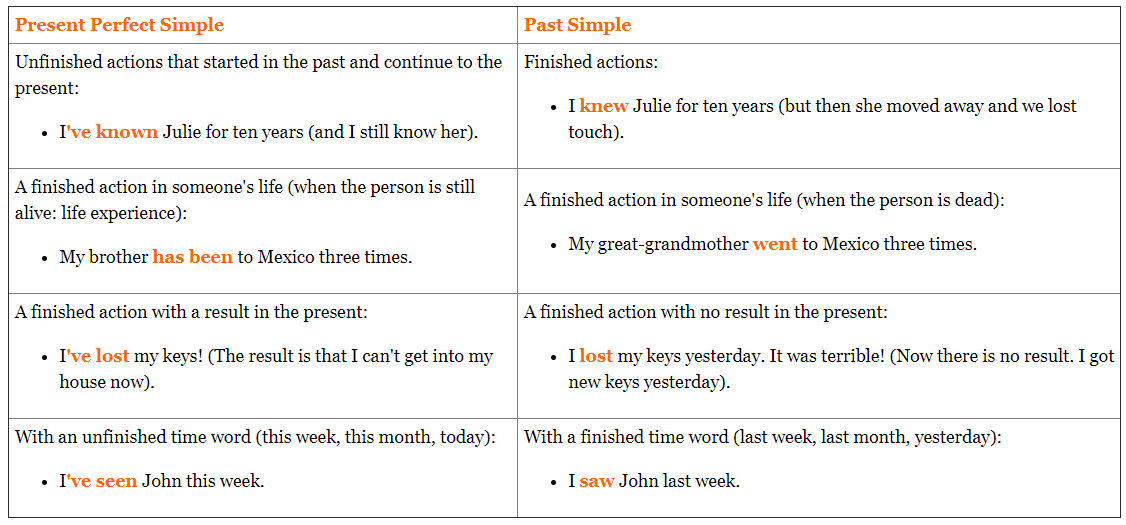
One key difference between the present perfect and past simple is the time frame in which the actions occurred. The present perfect focuses on the result or current relevance of the action, while the past simple emphasizes the specific time when the action took place. For instance, “I have visited Paris” (present perfect) implies that the speaker has been to Paris at some point in the past, but it doesn’t specify when. In contrast, “I visited Paris last summer” (past simple) indicates a specific time frame when the action happened.
Another difference is the use of adverbs with these tenses. Adverbs such as “just,” “already,” and “yet” are commonly used with the present perfect to indicate the recent completion of an action. For example, “I have just finished my work.” In contrast, adverbs like “yesterday,” “last week,” and “two years ago” are often used with the past simple to specify when the action occurred. For example, “I went to the beach last weekend.”
It’s important to note that the choice between the present perfect and past simple can also depend on the speaker’s focus on the action itself or its result. The present perfect is more commonly used when the emphasis is on the result or consequences of the action, while the past simple is preferred for narrating a series of completed actions in a story.
In conclusion, mastering the difference between the present perfect and past simple can greatly enhance your English language skills. By understanding the nuances of these two tenses and practicing their usage in context, you can communicate more effectively and accurately in both spoken and written English.