Present perfect tense is a crucial aspect of English grammar that is used to describe actions that have been completed at some point in the past but have relevance to the present. It is a versatile tense that allows us to talk about experiences, achievements, and changes that have occurred over time.
Understanding how to use the present perfect tense correctly can greatly enhance your ability to communicate effectively in English. By mastering this tense, you will be able to convey information about past events in a way that is clear and concise.
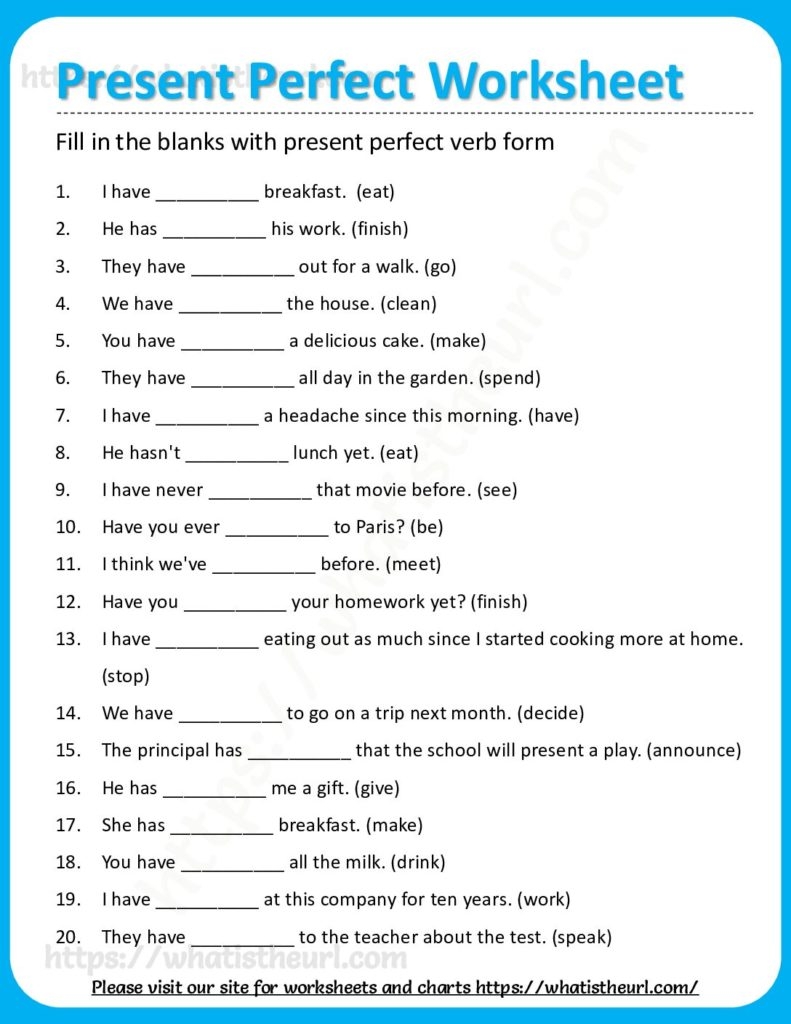
Present Perfect Tense
The present perfect tense is formed by using the auxiliary verb “have” or “has” followed by the past participle of the main verb. For example, “I have finished my homework.” In this sentence, “have” is the auxiliary verb, and “finished” is the past participle of the verb “finish.”
One of the key uses of the present perfect tense is to talk about experiences. For instance, “I have visited Paris three times.” This sentence indicates that the speaker has visited Paris on three separate occasions in the past, with the implication that they may visit again in the future.
Additionally, the present perfect tense can be used to discuss achievements or actions that have occurred at an unspecified time in the past. For example, “She has written a novel.” This sentence conveys the idea that the action of writing a novel has been completed, without specifying when it took place.
Furthermore, the present perfect tense can also be used to describe changes that have taken place over time. For instance, “The climate has become warmer in recent years.” This sentence highlights the shift in climate over a period of time, indicating that the change is ongoing and has relevance to the present.
In conclusion, the present perfect tense is a valuable tool for expressing past events and their connection to the present. By mastering this tense, you can communicate effectively and accurately in English, conveying information about experiences, achievements, and changes with clarity and precision.