Understanding grammar and tenses is essential for effective communication in any language. One of the most commonly used tenses in English is the present perfect tense. This tense is used to connect the past with the present, indicating that an action has been completed at some point in the past but has relevance to the present moment.
Using the present perfect tense correctly can help convey precise information about the timing of an action or event. It is important to grasp the nuances of this tense to avoid confusion in communication and to accurately express thoughts and ideas.
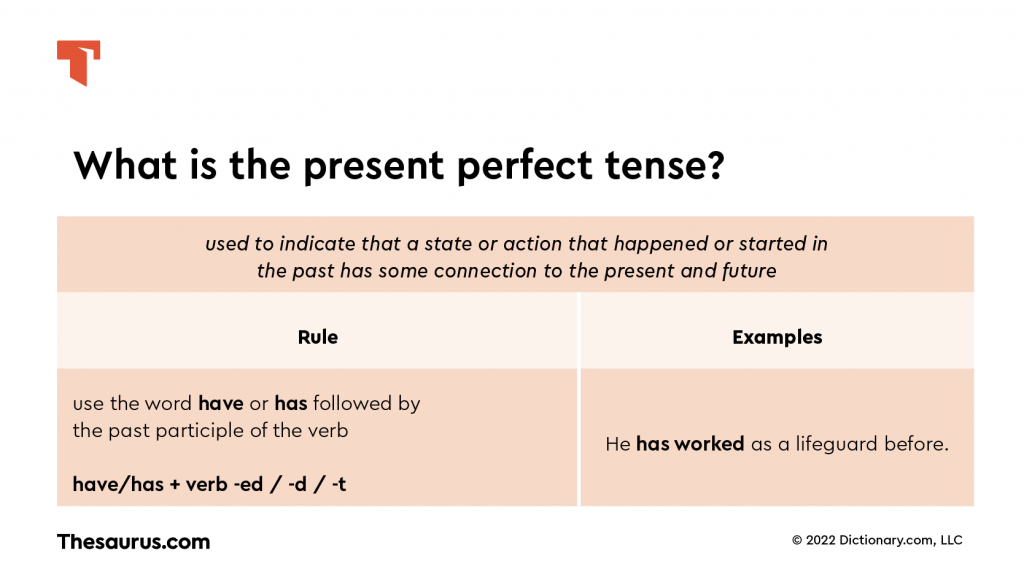
Present Perfect Tense Meaning
The present perfect tense is formed by using the auxiliary verb “have” or “has” followed by the past participle of the main verb. This tense is used to talk about actions or events that have been completed at some point in the past but have a connection to the present time. It is often used to describe experiences, changes, or actions that have occurred in a time frame that is not specified.
For example, “I have visited Paris” indicates that the action of visiting Paris was completed at some point in the past, but the experience of visiting Paris is relevant to the present moment. The present perfect tense is also used to talk about actions that have occurred multiple times in the past or actions that have an effect on the present.
Another common usage of the present perfect tense is to talk about recent actions or events that have an impact on the present. For example, “I have just finished my homework” indicates that the completion of homework is recent and has relevance to the present moment. This tense is versatile and can be used in various contexts to convey specific meanings.
Overall, the present perfect tense plays a crucial role in English grammar and communication. By understanding the meaning and usage of this tense, individuals can effectively express themselves and convey precise information about past actions with relevance to the present. Mastering the present perfect tense can enhance language proficiency and improve overall communication skills.
In conclusion, the present perfect tense is a valuable tool for expressing past actions with present relevance. By utilizing this tense correctly, individuals can enhance their language skills and effectively communicate in various contexts. Understanding the nuances of the present perfect tense is essential for clear and accurate communication in English.