Understanding the difference between simple past and present perfect simple can be challenging for English language learners. Both tenses are used to talk about actions that happened in the past, but they are used in different contexts. Let’s explore the differences between the two tenses and how they are used.
In simple past, the action happened at a specific time in the past and is completed. For example, “I visited Paris last summer.” The action is finished and is not connected to the present. On the other hand, present perfect simple is used to talk about actions that happened at an unspecified time in the past or have a connection to the present. For example, “I have visited Paris several times.” This sentence implies that the action of visiting Paris has happened multiple times in the past and may continue in the future.
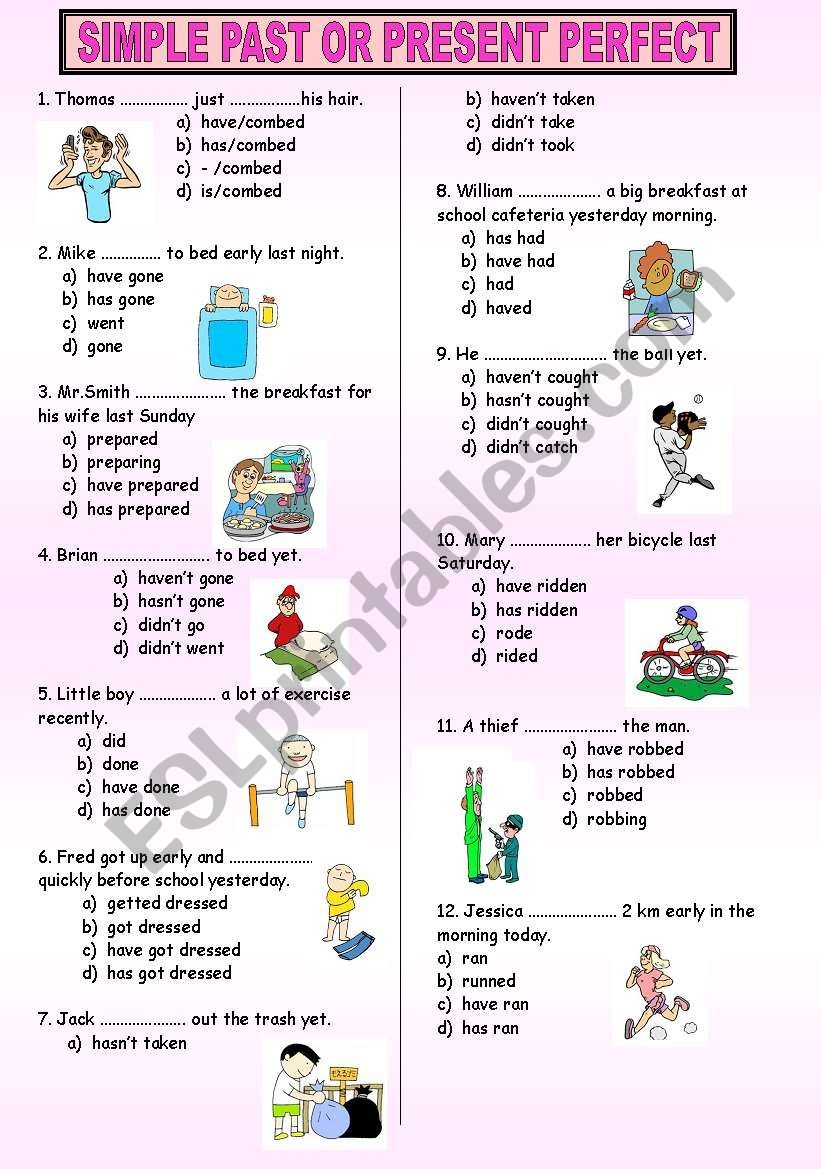
Another key difference between simple past and present perfect simple is the use of time expressions. Simple past often uses time expressions like “yesterday,” “last week,” or “in 2005” to indicate when the action took place. Present perfect simple, on the other hand, is often used with time expressions like “ever,” “never,” “before,” or “already” to show a connection to the present moment. For example, “I have never been to Japan.” This sentence indicates that the action of going to Japan has not happened at any time in the past up to the present moment.
It’s important to remember that the choice between simple past and present perfect simple depends on the context of the sentence and the speaker’s intention. If the action is completed and not connected to the present, simple past is used. If the action has a connection to the present or is ongoing, present perfect simple is used. Practice using both tenses in different contexts to become more comfortable with their usage.
In conclusion, simple past and present perfect simple are both used to talk about actions that happened in the past, but they are used in different contexts. By understanding the differences between the two tenses and practicing their usage, you can improve your English language skills and communicate more effectively. Remember to pay attention to time expressions and the connection to the present when deciding which tense to use in your sentences.