In the English language, subject-verb agreement is an important grammatical rule that states that the subject and verb in a sentence must agree in number. This means that if the subject is singular, the verb must also be singular, and if the subject is plural, the verb must be plural as well. Failure to follow this rule can lead to confusion and incorrect usage of language.
Understanding subject-verb agreement is crucial for clear and effective communication. It helps to ensure that sentences are grammatically correct and easy to understand for the reader. By following this rule, writers can avoid common errors that can detract from the overall quality of their writing.
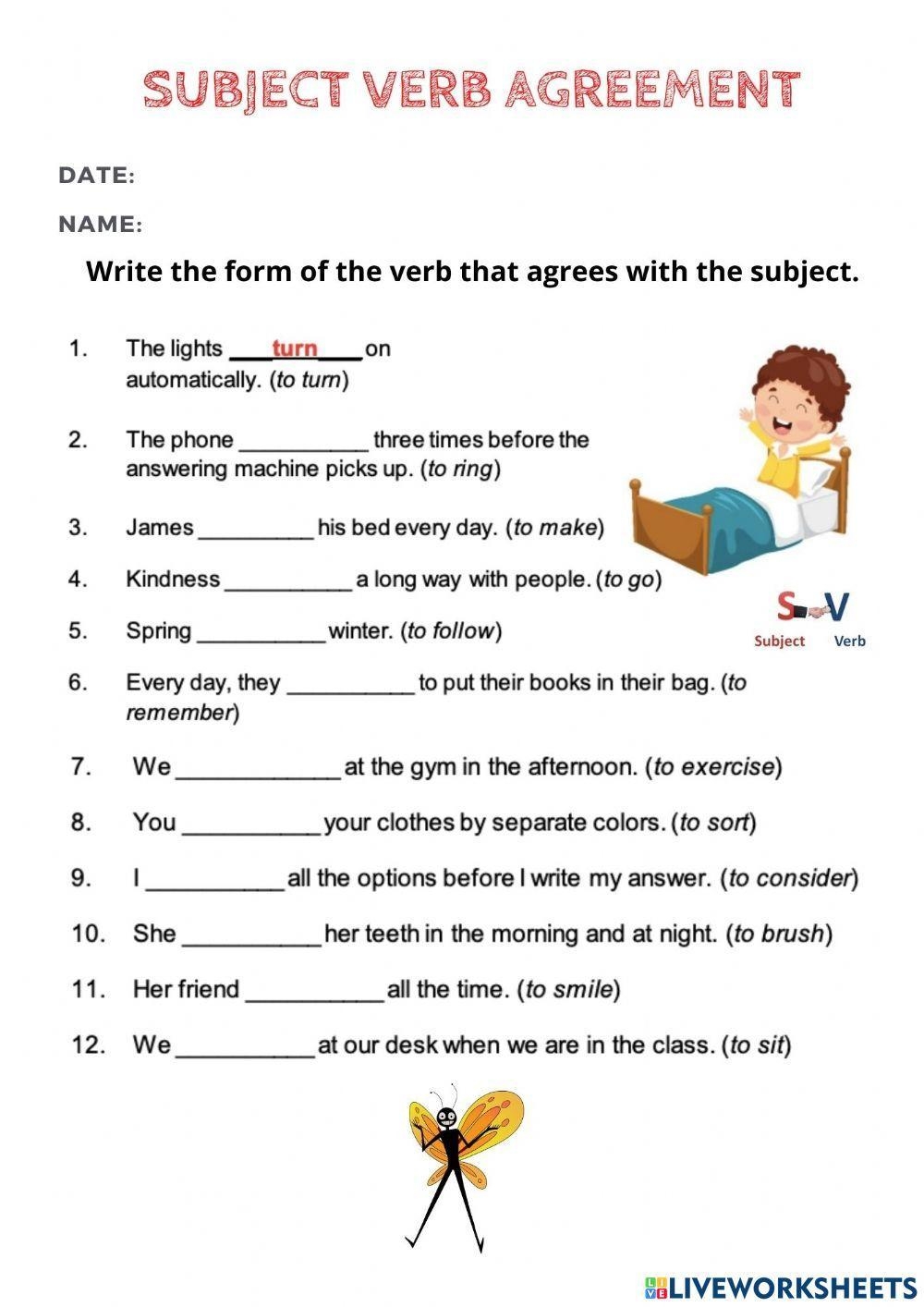
Sample Sentences:
1. The cat is sleeping on the sofa. (singular subject and verb)
2. The dogs are barking loudly in the yard. (plural subject and verb)
3. She has finished her homework. (singular subject and verb)
4. They have gone to the store. (plural subject and verb)
5. The flower smells lovely. (singular subject and verb)
6. The birds are chirping in the trees. (plural subject and verb)
7. He likes to read books. (singular subject and verb)
8. We are going to the beach. (plural subject and verb)
9. The team is practicing for the big game. (singular subject and verb)
10. The students are studying for their exams. (plural subject and verb)
Overall, subject-verb agreement is a fundamental aspect of English grammar that should not be overlooked. By paying attention to this rule and practicing with sample sentences, writers can improve their writing skills and ensure that their sentences are clear, concise, and grammatically correct.