Synonyms and antonyms are important aspects of language that help us express ourselves effectively. They provide variety and depth to our vocabulary, enabling us to communicate more precisely and vividly. Understanding the differences between synonyms and antonyms can enhance our writing and speaking skills.
While synonyms are words that have similar meanings, antonyms are words that have opposite meanings. Both play a crucial role in enriching our language and enabling us to convey our thoughts and emotions accurately. By using synonyms and antonyms appropriately, we can avoid repetition and make our language more engaging.
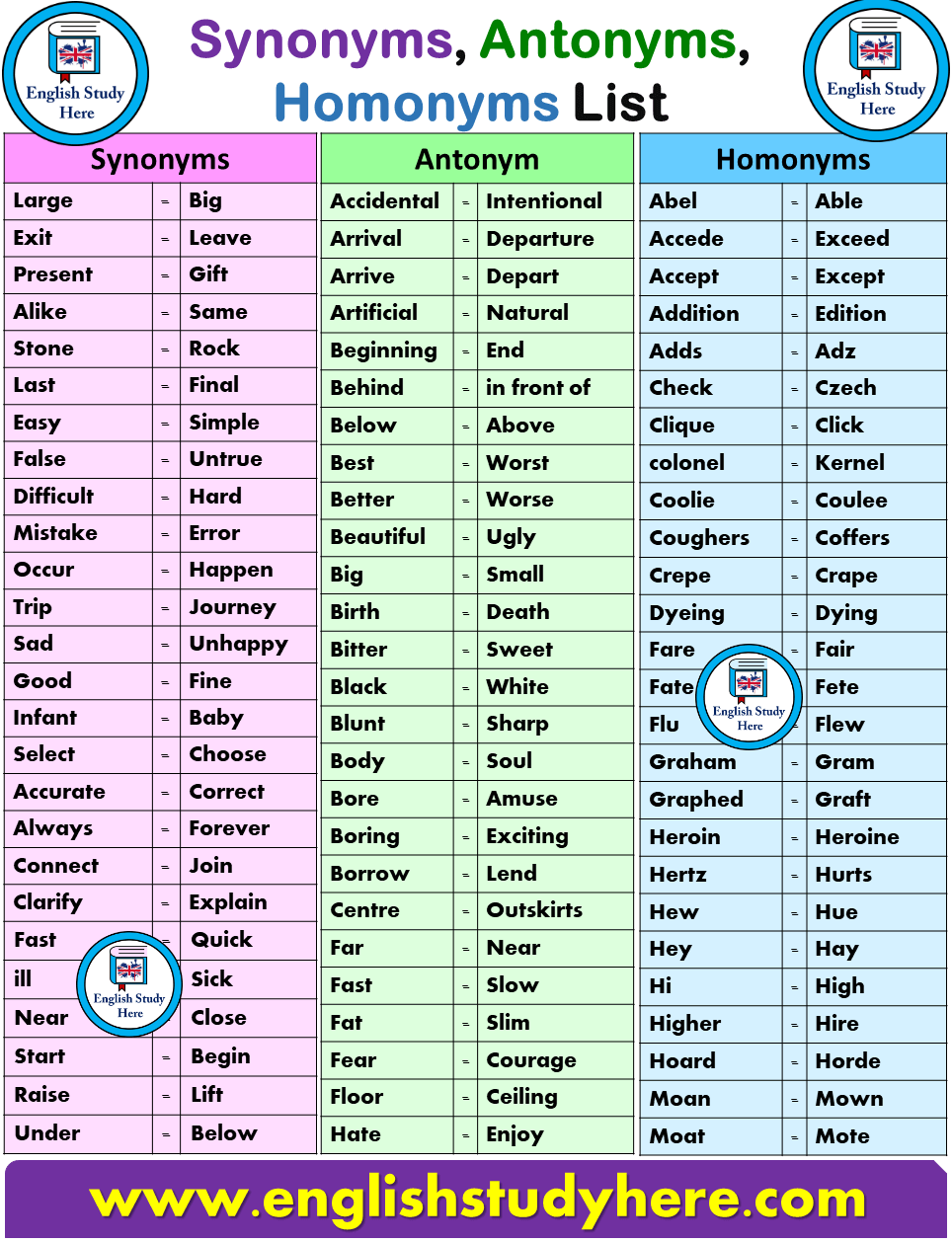
Synonyms and Antonyms
Synonyms can be used to enhance the quality of our writing and speech by adding variety and sophistication. For example, instead of using the word “happy” repeatedly, we can use synonyms like “joyful,” “ecstatic,” or “elated” to convey different shades of happiness. Similarly, antonyms can be employed to create contrast and emphasize differences. For instance, using “hot” and “cold” in the same sentence can effectively highlight the disparity in temperature.
It is essential to choose synonyms and antonyms carefully based on the context and tone of our communication. While synonyms can add depth and nuance to our language, using them incorrectly can lead to confusion or ambiguity. Similarly, antonyms should be used judiciously to avoid creating contradictions or inconsistencies in our writing. By mastering the art of synonyms and antonyms, we can elevate the quality of our language and make our communication more effective.
In conclusion, synonyms and antonyms play a vital role in language usage, enabling us to express ourselves with precision and clarity. By understanding the nuances of synonyms and antonyms, we can enrich our vocabulary and enhance our communication skills. Whether we are writing an essay, giving a speech, or engaging in a conversation, the judicious use of synonyms and antonyms can make our language more vibrant and engaging.